Why Your Weight Loss Journey Should Focus on Fat Mass, Not Just Scale Weight
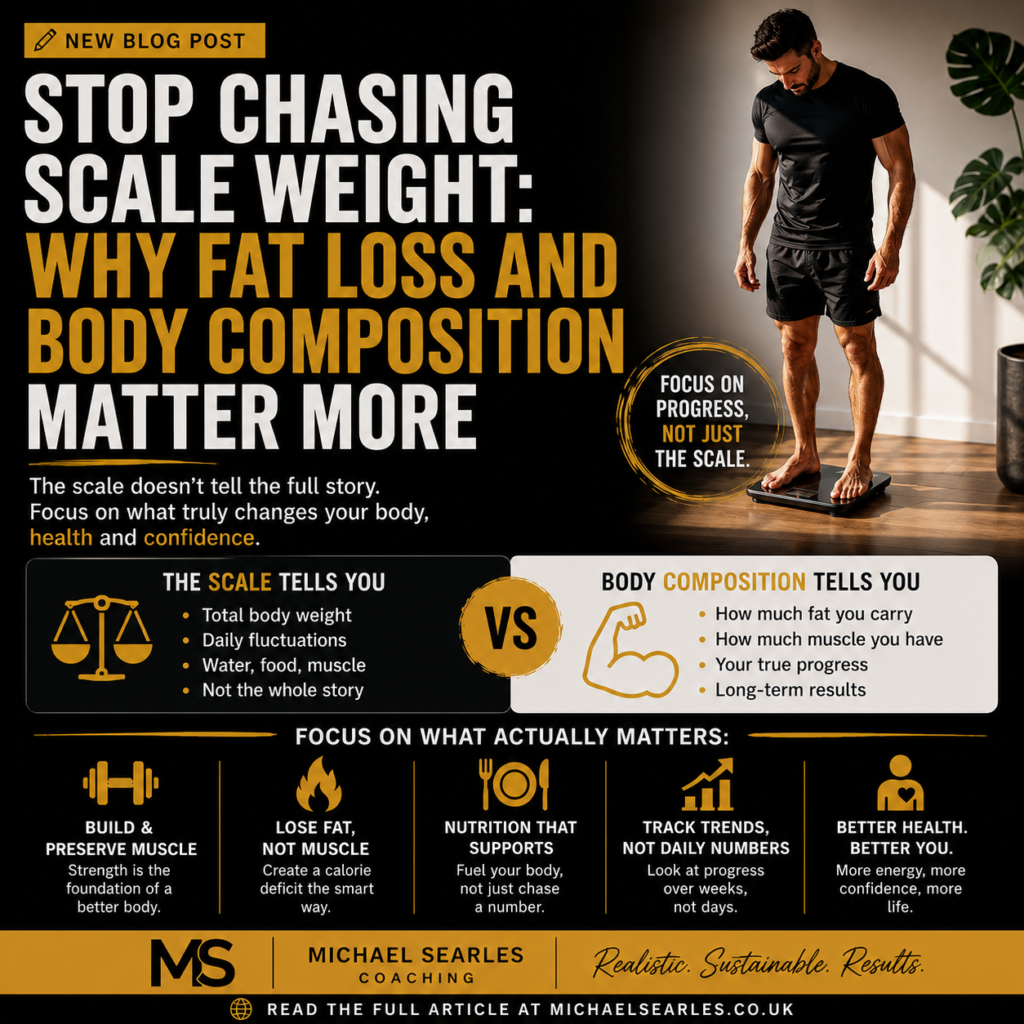
When embarking on a weight loss journey, it’s tempting to focus solely on the number on the scale. However, true fitness and health go beyond just losing weight. It’s crucial to consider your fat mass vs. muscle mass ratio. This distinction can make all the difference in achieving long-term health and a fit physique. The Misleading Nature of Scale Weight Your body weight includes muscle, fat, bones, and water. A scale doesn’t differentiate between these components. Consequently, two people with the same weight can look and feel vastly different depending on their body composition. Research has shown that focusing on reducing fat mass while preserving or increasing muscle mass leads to better health outcomes. A study published in the **American Journal of Clinical Nutrition** found that maintaining muscle mass while losing weight improved metabolic health more significantly than weight loss alone . Benefits of Monitoring Fat Mass and Muscle Mass 1. **Improved Metabolic Health**: Muscle mass is metabolically active, meaning it burns more calories at rest compared to fat mass. Increasing your muscle mass can help boost your metabolism, aiding in more efficient weight management. 2. **Better Physical Appearance**: Muscle mass contributes to a toned and firm appearance. As you reduce fat and build muscle, you’ll notice a more sculpted physique, even if your scale weight doesn’t change dramatically. 3. **Enhanced Strength and Performance**: Increasing muscle mass improves strength, endurance, and overall physical performance. This is especially beneficial for those looking to engage in more strenuous activities or improve their athletic performance. How to Focus on Fat Loss Over Weight Loss 1. **Strength Training**: Incorporate resistance training into your routine. Lifting weights or using resistance bands helps build muscle and burn fat simultaneously. 2. **Nutritional Adjustments**: Ensure your diet supports muscle growth and fat loss. This typically includes high-quality protein sources, healthy fats, and a balanced intake of carbohydrates. 3. **Regular Assessments**: Use tools like body fat calipers, bioelectrical impedance scales, or DEXA scans to monitor changes in your body composition. Regular assessments will help you adjust your training and nutrition plan effectively. Seek Professional Guidance For those unsure where to start, seeking the guidance of a professional can be invaluable. If you’re looking for a “personal trainer near me” or a “personal trainer in Umhlanga,” I can provide personalized advice and support tailored to your unique needs. I will design a program that targets fat loss while promoting muscle gain, ensuring you achieve optimal results. Conclusion In conclusion, focusing on your fat mass vs. muscle mass ratio rather than just your scale weight is key to a successful and sustainable fitness journey. This approach not only enhances your physical appearance but also boosts your metabolic health and overall performance. For those in search of expert guidance, finding a “fitness gym near me” or a “personal trainer in Umhlanga” can set you on the right path to achieving your fitness goals. References: 1. Stiegler, P., & Cunliffe, A. (2006). The role of diet and exercise for the maintenance of fat-free mass and resting metabolic rate during weight loss. *Sports Medicine, 36*(3), 239-262. [Link] 2. Fogelholm, M. (2010). Physical activity, fitness and fatness: Relations to mortality, morbidity and disease risk factors. *Obesity Reviews, 11*(3), 202-221. [Link] Embark on your fitness journey today and see how focusing on fat mass vs. muscle mass can transform your health and body.
Only Have 30 Minutes? You Still Have Time to Get Stronger
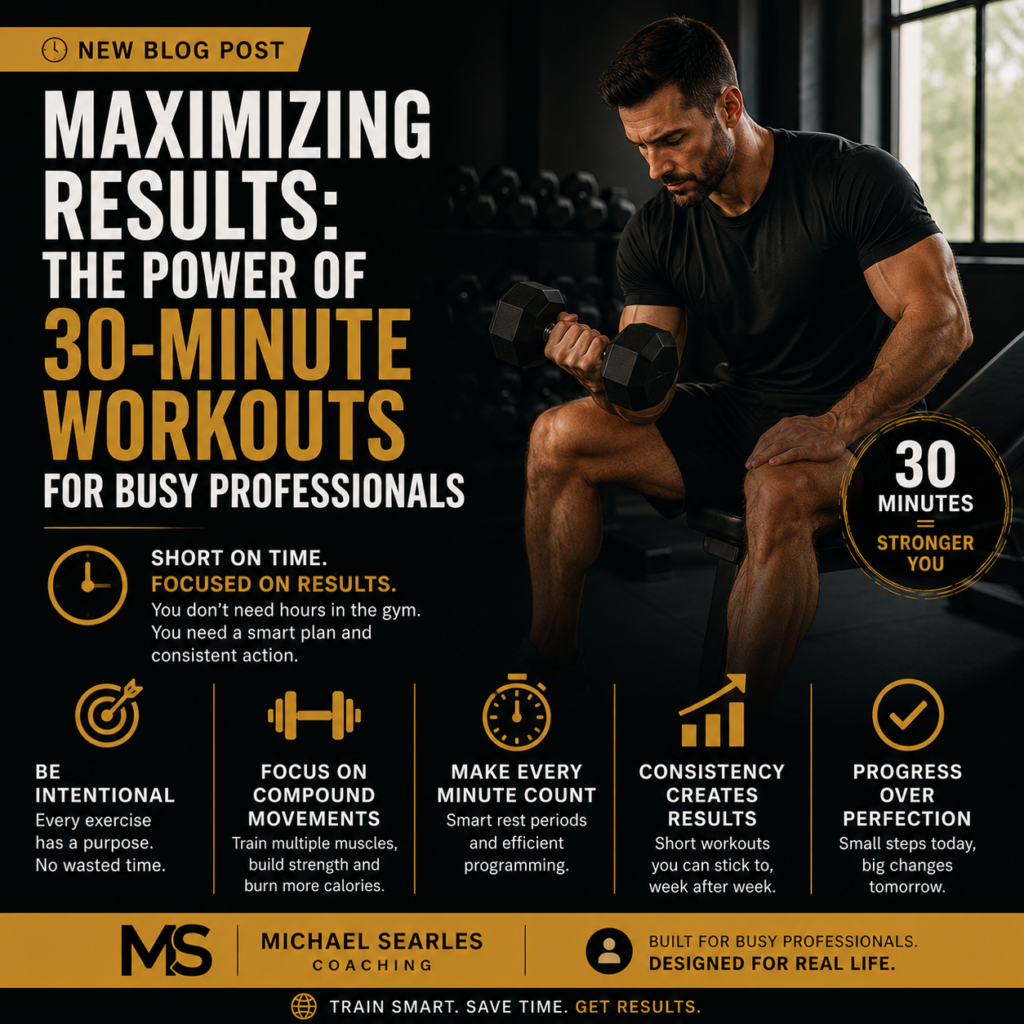
You Don’t Need to Live in the Gym One of the most common reasons people give for not training is completely understandable: “I don’t have enough time.” Work. Meetings. Commuting. Family. Travel. Social commitments. For a busy professional, finding 60–90 uninterrupted minutes several times every week isn’t always realistic. But here’s the important part: You don’t necessarily need 90 minutes. Give me 30 focused minutes and we can accomplish considerably more than most people achieve during an hour of wandering around the gym checking their phone between sets. Training Quality Beats Training Duration Longer doesn’t automatically mean better. An effective training session needs a purpose. If we know exactly what we’re trying to accomplish, exercises can be selected intelligently and unnecessary work removed. A 30-minute session might contain only four or five movements. That’s perfectly fine. We aren’t collecting exercises. We’re creating an appropriate training stimulus. Focus on High-Value Exercises When time is limited, exercise selection becomes particularly important. Instead of spending half the session performing numerous isolation exercises, I generally prioritise movements that train substantial amounts of muscle. Depending on the person, these might include variations of: Squats or leg presses. Deadlifts or Romanian deadlifts. Rows. Presses. Pulldowns. Split squats. Loaded carries. The exact exercises aren’t universal. They should reflect your goals, ability, training history and any relevant limitations. But the principle remains: Get the important work done first. Use Your Rest Periods Intelligently Thirty-minute training doesn’t mean racing between exercises until you’re lying on the floor. Rest still matters—particularly when strength and performance are priorities. But we can structure the session intelligently. For example, an upper-body pushing exercise may sometimes be paired with an upper-body pulling movement. While one muscle group recovers, another performs useful work. This can make the session considerably more time-efficient without turning strength training into random cardio. Stop Confusing Exhaustion With Effectiveness A workout doesn’t need to leave you destroyed to have been productive. Sweating isn’t a measurement of muscle growth. Soreness isn’t a score. And collapsing onto the floor afterwards doesn’t automatically mean the programme was effective. What matters is whether your training provides an appropriate stimulus and whether you progressively improve over time. Could you perform another repetition? Has your technique improved? Are you gradually using more resistance? Are you completing more quality work? Those questions tell us considerably more than how exhausted you feel. Three Focused Sessions Can Add Up Imagine you train for 30 minutes three times per week. That doesn’t sound particularly dramatic. But that’s 78 hours of structured training over a year if maintained consistently. Now compare that with someone who repeatedly starts an ambitious five-day programme, manages it for three weeks, disappears for two months and starts again. Consistency compounds. That’s why I would rather build a programme around the time you genuinely have than design an impressive schedule you can’t maintain. The Busy-Week Version Matters I also like clients to have a reduced version of their programme. Perhaps your normal session takes 50 minutes. Then work explodes. Instead of abandoning training entirely, we reduce the session to the most important 25–30 minutes. You maintain the habit. You maintain exposure to resistance training. And when life settles down, you return to the full programme. This eliminates one of the biggest problems in fitness: all-or-nothing thinking. Thirty minutes isn’t a failed 60-minute workout. It’s a successful 30-minute workout. Your Programme Should Fit Your Life This is particularly important for professionals with demanding schedules. Your training programme should acknowledge reality. If you travel regularly, let’s account for it. If mornings are your only reliable opportunity, we’ll structure around mornings. If you can train twice during a difficult week and four times during a quieter one, your programme can accommodate that. Personalisation isn’t just choosing different exercises. It’s designing training that works within the person’s actual life. Thirty Minutes Is Enough to Start You may eventually decide you enjoy training and want longer sessions. Great. But don’t allow the belief that workouts need to consume hours of your week to prevent you from starting. Walk into the gym knowing exactly what you’re doing. Prioritise the important movements. Train with intent. Record your progress. Then get back to your life. You don’t need more time. You need to make better use of the time you have. Training Around a Demanding Schedule? I offer personalised coaching designed around your goals, availability and experience, including face-to-face, live virtual and online coaching options. DISCOVER COACHING →