Fat Loss Without the Extremes: What Actually Matters
Fat loss has somehow become incredibly complicated. Detoxes. Fasting protocols. Fat-burning supplements. Foods you’re supposedly never allowed to eat again. Thirty-day transformations. And an endless stream of social-media advice telling you that one particular food, hormone or training method is the reason you haven’t achieved your goal. Yet underneath all that noise is a much simpler principle: Fat loss requires an energy deficit over time. That doesn’t mean the process is always easy. Human behaviour, appetite, lifestyle, environment and individual circumstances make nutrition considerably more complicated than a simple equation. But understanding the fundamentals allows us to stop searching for shortcuts and start building an approach we can actually maintain. Calories Matter — But Context Matters Too Your body uses energy every day. Energy is required to keep you alive, maintain your tissues, digest food and perform physical activity. When energy intake remains below energy expenditure over time, stored energy can be used and body mass tends to decrease. That doesn’t mean everybody needs to obsessively count every calorie forever. It means we shouldn’t pretend energy balance doesn’t exist. The better question is: How can we create an appropriate calorie deficit without making your life miserable? That’s where food selection, protein, activity, training and behaviour become particularly useful. Prioritise Protein Protein deserves particular attention when improving body composition. It provides amino acids required by the body and supports the maintenance and development of muscle tissue. Protein-rich foods can also help create satisfying meals. Practical options might include: Eggs. Fish. Lean meat. Poultry. Greek yoghurt. Cottage cheese. Tofu and other soy foods. Beans and lentils. And protein supplements where they’re useful and convenient. Exact requirements vary between individuals. But making sure your main meals contain a meaningful source of protein is a useful starting point for many people. Don’t Diet So Hard That You Can’t Train One of the most common mistakes I see is trying to lose weight as quickly as possible. Food intake plummets. Energy disappears. Training performance suffers. Hunger increases. The diet becomes increasingly difficult to maintain. Eventually the person abandons it altogether. Then, a few months later, another extreme approach begins. A more moderate strategy may produce less dramatic changes from one week to the next, but sustainability matters. Remember: You’re not trying to become brilliant at dieting. You’re trying to achieve a result you can maintain when the diet ends. Strength Training Belongs in a Fat-Loss Programme If improving body composition is the objective, don’t make exercise exclusively about burning calories. Resistance training gives us an opportunity to develop or preserve muscle while nutrition creates the conditions required for fat loss. That’s an important distinction. The goal isn’t necessarily to make the number on the scale as small as possible. For many people, what they actually want is to become: Leaner. Stronger. Fitter. Healthier. Those goals require us to look beyond body weight alone. Walking Is Seriously Underrated Not every calorie needs to be burned through an exhausting workout. Walking is accessible, relatively easy to recover from and can substantially increase daily activity when performed consistently. Take the stairs. Walk during phone calls. Get outside after lunch. Walk part of your commute where practical. Park slightly further away. Small behaviours repeated hundreds of times can make a surprisingly meaningful difference. You don’t need every activity to feel like a workout for it to count. Stop Trying to Be Perfect A sustainable nutrition plan needs room for real life. Birthdays happen. Restaurants happen. Holidays happen. There will occasionally be pizza. None of these things automatically destroys your progress. The ability to return to your normal habits afterwards is considerably more valuable than trying to maintain dietary perfection indefinitely. If you’re consistent most of the time, occasional flexibility can exist within a successful approach. Monitor Progress Properly Body weight can be useful, but don’t become emotionally attached to individual readings. Weight naturally fluctuates. Instead, look at trends over time. Depending on your goals, other useful measures might include: Waist measurements. Progress photographs. How your clothing fits. Gym performance. Fitness. Energy levels. And, importantly, how consistently you’re actually following the plan. No single measurement tells the entire story. The Best Diet Is One You Can Actually Live With Successful fat loss isn’t about suffering harder than everybody else. It’s about establishing the appropriate conditions and maintaining them for long enough. Eat mostly nutritious foods. Consume adequate protein. Strength train. Stay active. Sleep properly. Monitor progress. Adjust when necessary. And leave enough flexibility to still have a life. The goal isn’t simply losing weight. It’s reaching a result without creating a lifestyle you can’t wait to escape from. BUILD A SUSTAINABLE PLAN Need a structured approach to training and nutrition built around your lifestyle? Explore personalised coaching with Michael Searles.
Why Strength Training Becomes More Important as You Get Older
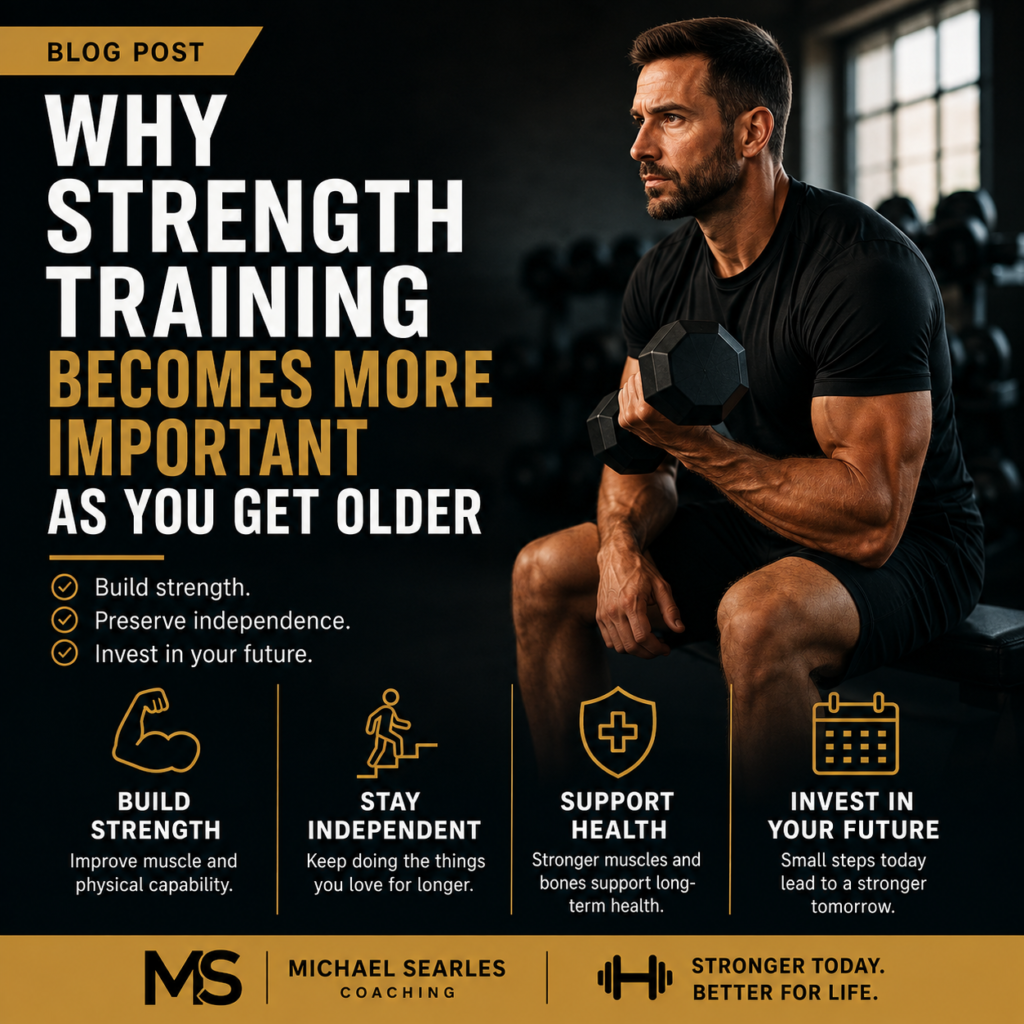
Getting older is unavoidable. Becoming weak, inactive and physically incapable doesn’t have to be. One of the most valuable investments you can make in your future health is maintaining your strength, muscle mass and physical capability. Strength training is often associated with aesthetics — building muscle, developing stronger legs or creating a leaner physique. Those can certainly be benefits. But the real value of strength training extends far beyond what you see in the mirror. As we move through adulthood, maintaining our physical capacity becomes increasingly important. Muscle Is About More Than Appearance Skeletal muscle allows us to move. It helps us climb stairs, carry shopping, lift luggage, play sport, get off the floor and perform countless everyday activities that are easy to take for granted when we’re younger. Maintaining sufficient muscle and strength therefore gives us something incredibly valuable: Physical independence. You don’t need to become a bodybuilder. For most people, the objective is much simpler. Develop enough strength and physical capacity to continue doing the things you enjoy for as long as possible. Strength Is Your Physical Reserve One of my favourite ways to think about strength is as a reserve capacity for life. Imagine carrying two heavy shopping bags currently feels difficult. If you spend the next year becoming significantly stronger, those bags haven’t changed. You have. The same task now represents a smaller percentage of your maximum physical capacity. This applies to countless aspects of everyday life. Lifting luggage. Walking up stairs. Moving furniture. Playing with children or grandchildren. Getting yourself off the floor. The stronger and more capable you are, the less demanding many ordinary physical tasks become. Your Body Needs a Reason to Stay Strong The body adapts to what we repeatedly ask it to do. If we stop challenging our muscles, there’s little reason for the body to maintain physical capabilities that are no longer required. Resistance training provides that challenge. Exercises such as squats, presses, rows, hinges, lunges and loaded carries can progressively challenge the muscles while developing useful movement skills. The important word is progressively. Doing exactly the same workout, with exactly the same resistance, indefinitely gives the body relatively little reason to continue adapting. A properly designed programme evolves as you do. Resistance can increase. Repetitions can change. Exercises can become more challenging. Training volume can be adjusted. The objective is continued progress rather than simply repeating workouts. Don’t Forget Your Bones Resistance training doesn’t only challenge muscle. Loading the body also places mechanical stress on bone. Alongside appropriate nutrition and other lifestyle factors, resistance and weight-bearing exercise can therefore form an important part of maintaining musculoskeletal health as we get older. And this is where the conversation around training needs to change. Exercise isn’t simply something we do because we want to look better this summer. It’s something we can use to protect our future physical capabilities. You Don’t Need to Train Every Day More isn’t automatically better. For many people, a few well-structured resistance-training sessions each week can provide an excellent foundation. The appropriate amount depends on the individual. Your age. Training history. Goals. Schedule. Recovery. Lifestyle. Previous injuries or limitations. A programme should reflect those factors rather than forcing everybody into the same routine. And consistency matters far more than occasional extreme effort. Two or three intelligently designed sessions performed consistently over months and years will generally achieve considerably more than an aggressive programme you abandon after three weeks. Cardio Still Matters Strength training isn’t an argument against cardiovascular exercise. Both matter. Cardiovascular fitness supports your ability to perform sustained activity, while resistance training develops qualities such as strength and muscular capacity. Walking matters. Cardiovascular training matters. Mobility matters. Nutrition matters. Sleep matters. Strength training simply deserves a prominent place within that bigger picture — particularly as maintaining physical capability becomes increasingly important. Train for the Person You Want to Be Later It’s easy to train exclusively for short-term goals. A holiday. A wedding. A photograph. A number on the scale. There’s nothing wrong with having those goals. But I’d encourage you to think further ahead as well. Train so you can travel. Train so you can carry your own luggage. Train so stairs don’t become intimidating. Train so you can get off the floor comfortably. Train so you can continue enjoying sport and physical activity. Train so your future world remains as large as possible. And yes — train because feeling strong is pretty good too. Strength isn’t just something you build for today. It’s something you invest in for the decades ahead. BUILD YOUR STRONGER FUTURE Looking for a training programme designed around your goals, experience and lifestyle? Explore personalised coaching with Michael Searles.
Why Your Weight Loss Journey Should Focus on Fat Mass, Not Just Scale Weight
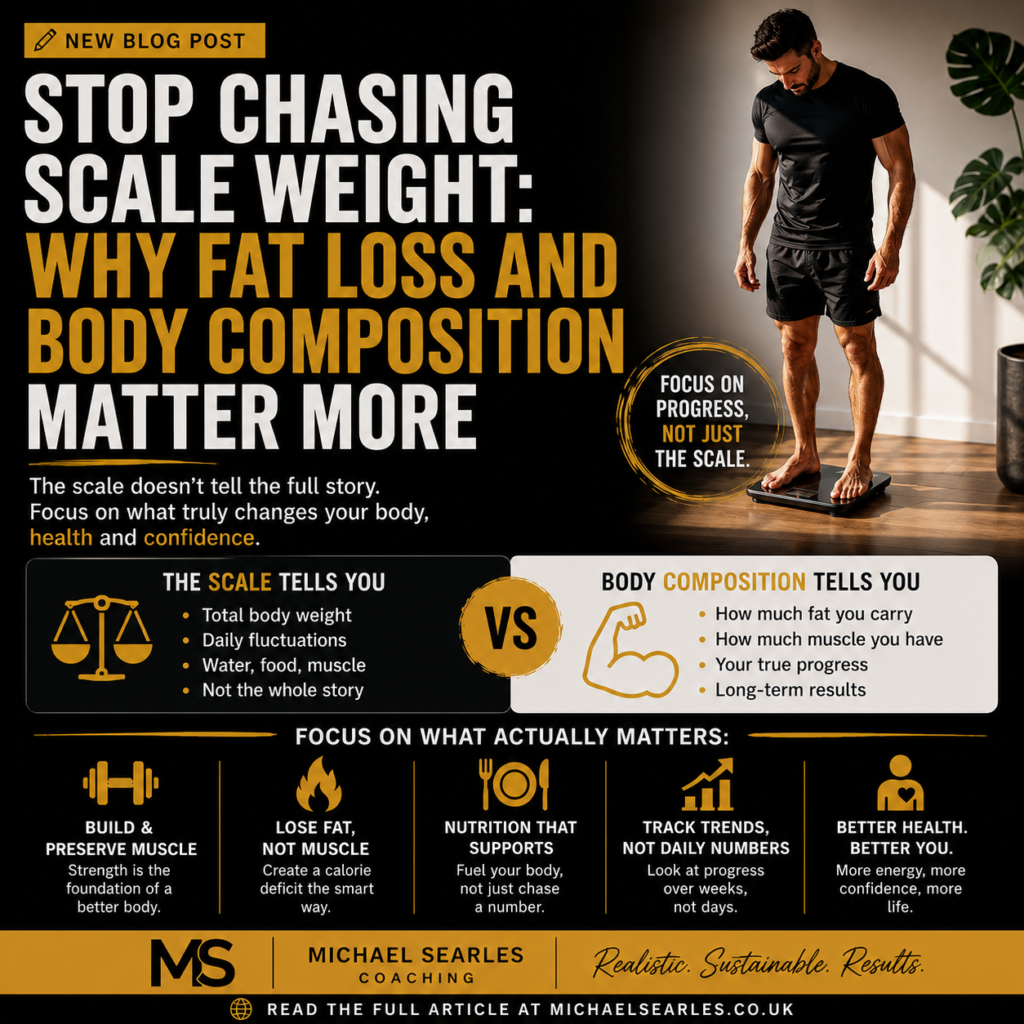
When embarking on a weight loss journey, it’s tempting to focus solely on the number on the scale. However, true fitness and health go beyond just losing weight. It’s crucial to consider your fat mass vs. muscle mass ratio. This distinction can make all the difference in achieving long-term health and a fit physique. The Misleading Nature of Scale Weight Your body weight includes muscle, fat, bones, and water. A scale doesn’t differentiate between these components. Consequently, two people with the same weight can look and feel vastly different depending on their body composition. Research has shown that focusing on reducing fat mass while preserving or increasing muscle mass leads to better health outcomes. A study published in the **American Journal of Clinical Nutrition** found that maintaining muscle mass while losing weight improved metabolic health more significantly than weight loss alone . Benefits of Monitoring Fat Mass and Muscle Mass 1. **Improved Metabolic Health**: Muscle mass is metabolically active, meaning it burns more calories at rest compared to fat mass. Increasing your muscle mass can help boost your metabolism, aiding in more efficient weight management. 2. **Better Physical Appearance**: Muscle mass contributes to a toned and firm appearance. As you reduce fat and build muscle, you’ll notice a more sculpted physique, even if your scale weight doesn’t change dramatically. 3. **Enhanced Strength and Performance**: Increasing muscle mass improves strength, endurance, and overall physical performance. This is especially beneficial for those looking to engage in more strenuous activities or improve their athletic performance. How to Focus on Fat Loss Over Weight Loss 1. **Strength Training**: Incorporate resistance training into your routine. Lifting weights or using resistance bands helps build muscle and burn fat simultaneously. 2. **Nutritional Adjustments**: Ensure your diet supports muscle growth and fat loss. This typically includes high-quality protein sources, healthy fats, and a balanced intake of carbohydrates. 3. **Regular Assessments**: Use tools like body fat calipers, bioelectrical impedance scales, or DEXA scans to monitor changes in your body composition. Regular assessments will help you adjust your training and nutrition plan effectively. Seek Professional Guidance For those unsure where to start, seeking the guidance of a professional can be invaluable. If you’re looking for a “personal trainer near me” or a “personal trainer in Umhlanga,” I can provide personalized advice and support tailored to your unique needs. I will design a program that targets fat loss while promoting muscle gain, ensuring you achieve optimal results. Conclusion In conclusion, focusing on your fat mass vs. muscle mass ratio rather than just your scale weight is key to a successful and sustainable fitness journey. This approach not only enhances your physical appearance but also boosts your metabolic health and overall performance. For those in search of expert guidance, finding a “fitness gym near me” or a “personal trainer in Umhlanga” can set you on the right path to achieving your fitness goals. References: 1. Stiegler, P., & Cunliffe, A. (2006). The role of diet and exercise for the maintenance of fat-free mass and resting metabolic rate during weight loss. *Sports Medicine, 36*(3), 239-262. [Link] 2. Fogelholm, M. (2010). Physical activity, fitness and fatness: Relations to mortality, morbidity and disease risk factors. *Obesity Reviews, 11*(3), 202-221. [Link] Embark on your fitness journey today and see how focusing on fat mass vs. muscle mass can transform your health and body.
Only Have 30 Minutes? You Still Have Time to Get Stronger
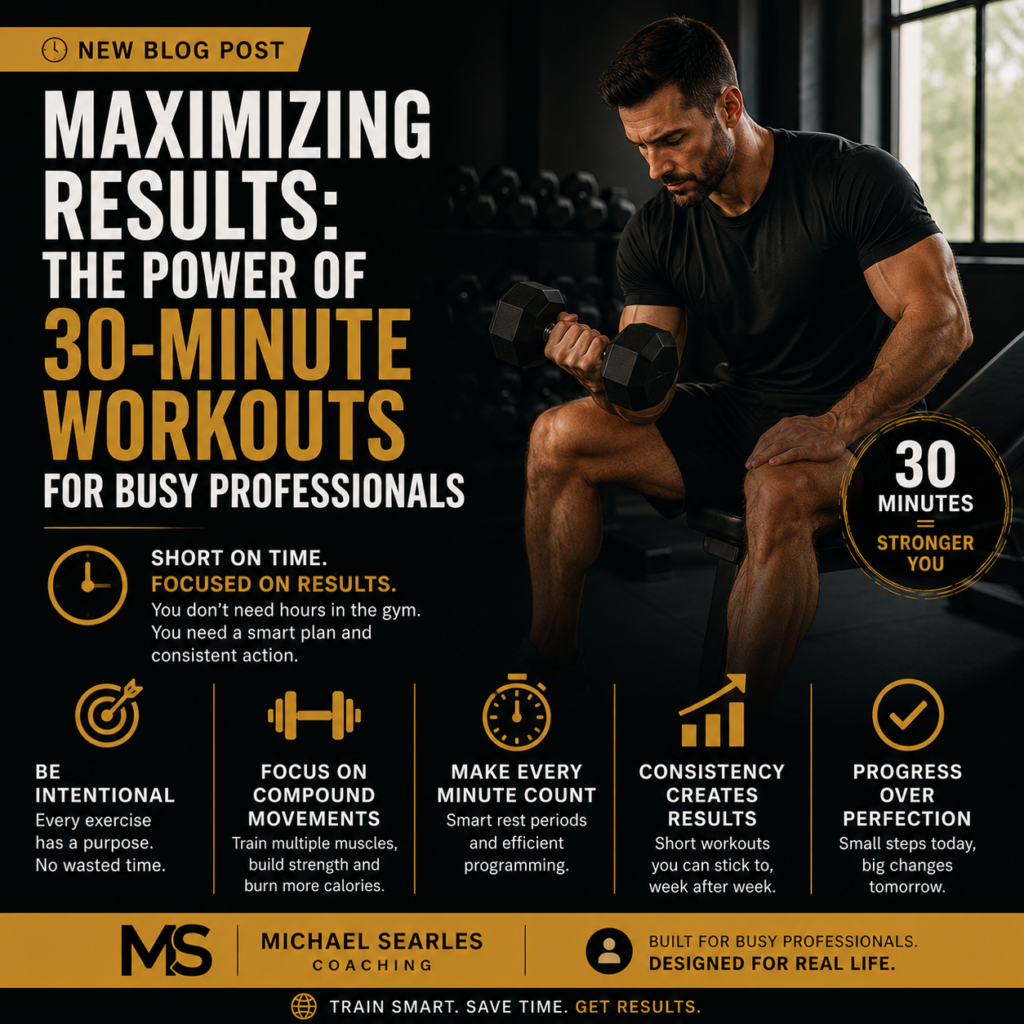
You Don’t Need to Live in the Gym One of the most common reasons people give for not training is completely understandable: “I don’t have enough time.” Work. Meetings. Commuting. Family. Travel. Social commitments. For a busy professional, finding 60–90 uninterrupted minutes several times every week isn’t always realistic. But here’s the important part: You don’t necessarily need 90 minutes. Give me 30 focused minutes and we can accomplish considerably more than most people achieve during an hour of wandering around the gym checking their phone between sets. Training Quality Beats Training Duration Longer doesn’t automatically mean better. An effective training session needs a purpose. If we know exactly what we’re trying to accomplish, exercises can be selected intelligently and unnecessary work removed. A 30-minute session might contain only four or five movements. That’s perfectly fine. We aren’t collecting exercises. We’re creating an appropriate training stimulus. Focus on High-Value Exercises When time is limited, exercise selection becomes particularly important. Instead of spending half the session performing numerous isolation exercises, I generally prioritise movements that train substantial amounts of muscle. Depending on the person, these might include variations of: Squats or leg presses. Deadlifts or Romanian deadlifts. Rows. Presses. Pulldowns. Split squats. Loaded carries. The exact exercises aren’t universal. They should reflect your goals, ability, training history and any relevant limitations. But the principle remains: Get the important work done first. Use Your Rest Periods Intelligently Thirty-minute training doesn’t mean racing between exercises until you’re lying on the floor. Rest still matters—particularly when strength and performance are priorities. But we can structure the session intelligently. For example, an upper-body pushing exercise may sometimes be paired with an upper-body pulling movement. While one muscle group recovers, another performs useful work. This can make the session considerably more time-efficient without turning strength training into random cardio. Stop Confusing Exhaustion With Effectiveness A workout doesn’t need to leave you destroyed to have been productive. Sweating isn’t a measurement of muscle growth. Soreness isn’t a score. And collapsing onto the floor afterwards doesn’t automatically mean the programme was effective. What matters is whether your training provides an appropriate stimulus and whether you progressively improve over time. Could you perform another repetition? Has your technique improved? Are you gradually using more resistance? Are you completing more quality work? Those questions tell us considerably more than how exhausted you feel. Three Focused Sessions Can Add Up Imagine you train for 30 minutes three times per week. That doesn’t sound particularly dramatic. But that’s 78 hours of structured training over a year if maintained consistently. Now compare that with someone who repeatedly starts an ambitious five-day programme, manages it for three weeks, disappears for two months and starts again. Consistency compounds. That’s why I would rather build a programme around the time you genuinely have than design an impressive schedule you can’t maintain. The Busy-Week Version Matters I also like clients to have a reduced version of their programme. Perhaps your normal session takes 50 minutes. Then work explodes. Instead of abandoning training entirely, we reduce the session to the most important 25–30 minutes. You maintain the habit. You maintain exposure to resistance training. And when life settles down, you return to the full programme. This eliminates one of the biggest problems in fitness: all-or-nothing thinking. Thirty minutes isn’t a failed 60-minute workout. It’s a successful 30-minute workout. Your Programme Should Fit Your Life This is particularly important for professionals with demanding schedules. Your training programme should acknowledge reality. If you travel regularly, let’s account for it. If mornings are your only reliable opportunity, we’ll structure around mornings. If you can train twice during a difficult week and four times during a quieter one, your programme can accommodate that. Personalisation isn’t just choosing different exercises. It’s designing training that works within the person’s actual life. Thirty Minutes Is Enough to Start You may eventually decide you enjoy training and want longer sessions. Great. But don’t allow the belief that workouts need to consume hours of your week to prevent you from starting. Walk into the gym knowing exactly what you’re doing. Prioritise the important movements. Train with intent. Record your progress. Then get back to your life. You don’t need more time. You need to make better use of the time you have. Training Around a Demanding Schedule? I offer personalised coaching designed around your goals, availability and experience, including face-to-face, live virtual and online coaching options. DISCOVER COACHING →